
29" Versus 32" Wheels
The Benefits & Considerations of Each System Are Many
We offer our mountain bikes and gravel bikes with either wheel size.
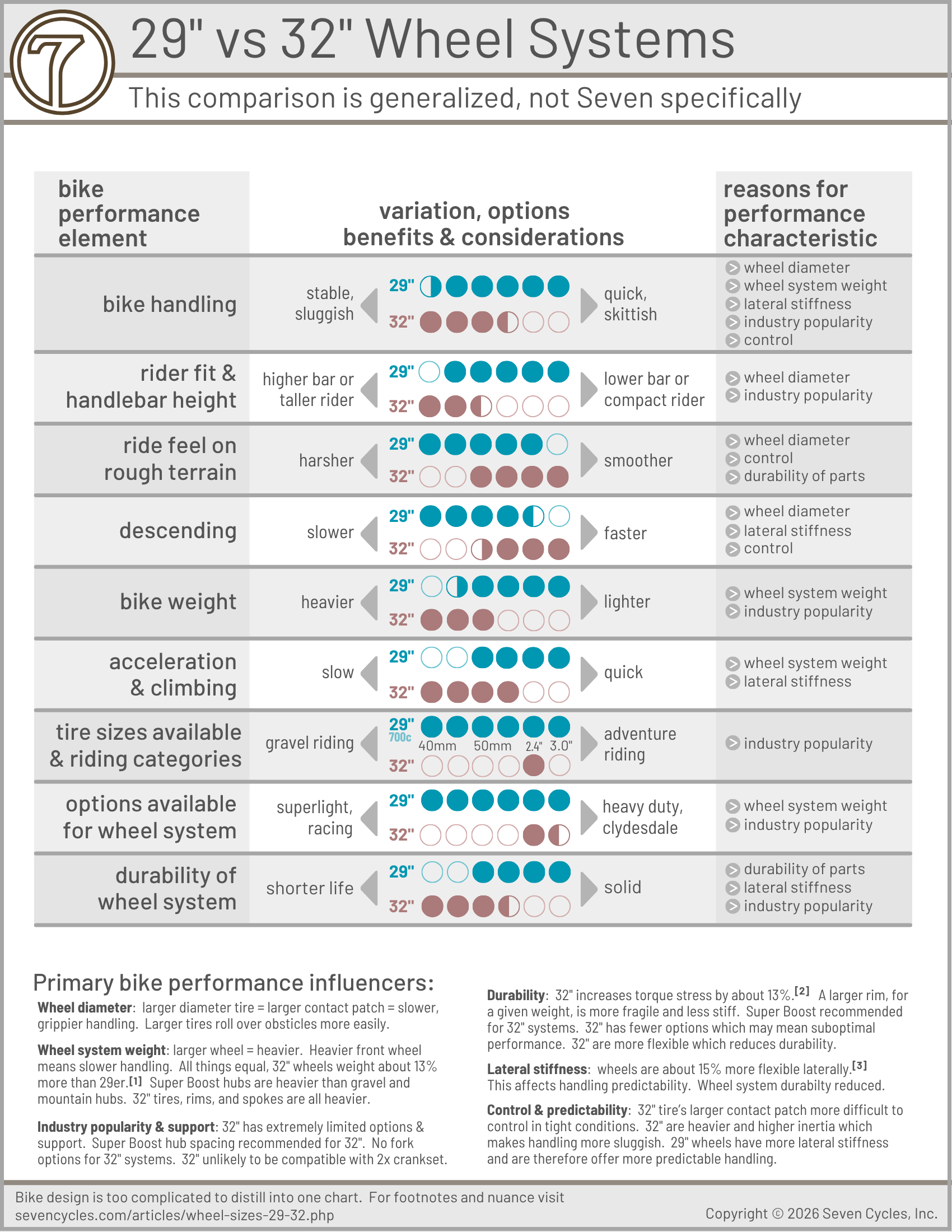
The three primary differences between 32" and 29" wheels are that:
- 29" wheels are about 13% lighter and stronger than 32" wheels.[1][2]
- 32" wheels offer more traction than 29" wheels.
- 29" wheels are more than one hundred times more popular, so there are hundreds more options available for tires, rims, spokes, and hubs.
For more details, see the 29" vs. 32" Wheel Systems table below.
Wheel Systems: 700c & 32"
We offer both 700c and 32" wheel systems. However, it's not a good idea to design a bike for both sizes at once; there's no way to get the geometry to work well for both.
Either/or; not Both and
It is not a good idea to design a single bike to accept both wheel and tire sizes. The current difference in wheel radii is too much for any one bike to manage.
New Doesn't Automatically Mean Better
The 32" wheel size option is new. Therefore, industry standards aren't settled and component options are limited. Best hub widths are still debated. Tire size options are non-existent; 2.4" mountain bike sizes are about it.
If you like being the first rider with new technology, or are a tall rider, 32" might be for you. For everyone else, at this moment, and if you'd like a future-proofed lightweight bike that will serve you well for a couple of decades, we recommend going with the industry standard 700c wheel size.
Footnotes for the article and for Figure 1: 29" vs. 32" Wheel Systems